How Should A Bespoke Dressing Room Store Shoes And Handbags Without Crushing Their Shape?
Shoes and bags fail inside closets that were dimensioned for clothes. Here is how depth, vertical clearance, support and light should be specified so leather keeps its shape for years.
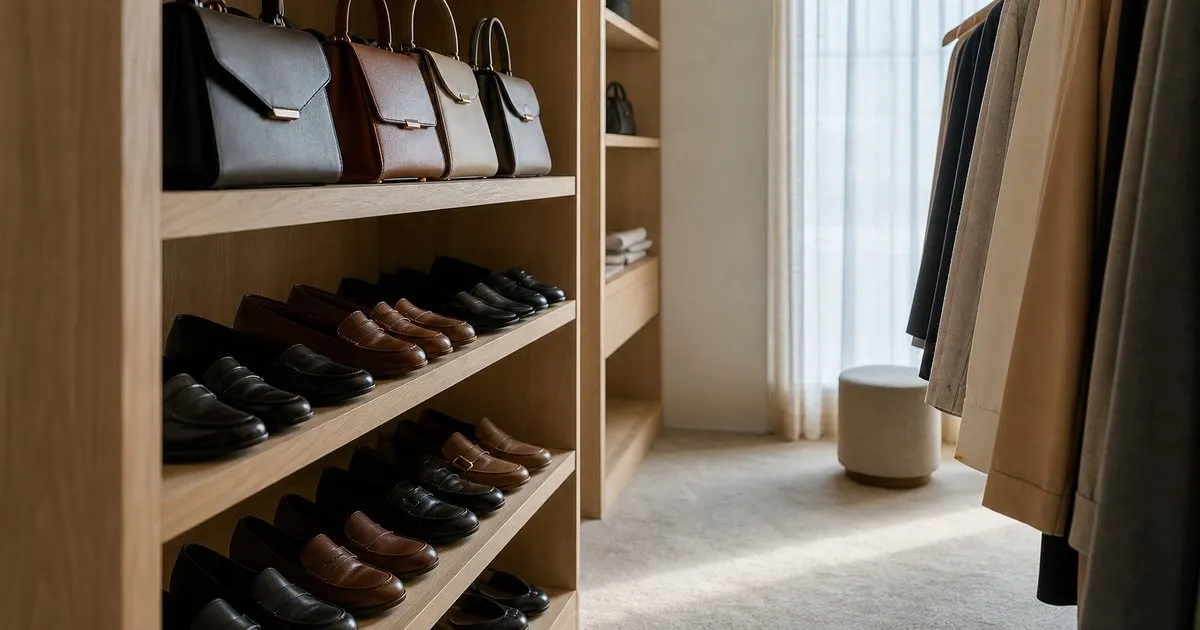
Why footwear and bags break the math behind a standard closet
Almost every closet system on the market is dimensioned around hanging clothes. A hanging section is typically about 24 inches deep because a shoulder on a hanger is roughly 22 inches across, and shelves above the rod inherit that same depth by default. Shoes and handbags obey entirely different geometry. A men's dress shoe in a larger size often runs close to 13 inches heel to toe, a knee boot may need 18 to 22 inches of vertical clearance to stand without folding at the ankle, and a structured top handle bag can measure 16 inches wide by 12 inches tall while refusing to be laid on its side without deforming. Put all of that on a generic 12 inch shelf spaced for folded sweaters and you get toes hanging over edges, boots slumped in the corner and bags stacked like books.
The second problem is structural rather than dimensional. Leather holds its shape only where something supports it. A calfskin bag stored on its side creases along the base and the crease sets permanently within a season. A soft hobo hung from its strap on a hook stretches the handle attachment. A pair of unlined suede boots pressed against a neighbor picks up the neighbor's outline. None of this shows on the first morning, which is why it survives so many closet designs. The practical conclusion is simple: shoes and bags deserve their own zones, drawn and dimensioned at the plan stage with their own depths and their own vertical rhythm, rather than being assigned whatever shelving is left once the hanging is laid out. Related: How Do You Plan Lighting And Ventilation For A Luxury Walk In Closet?
Keep reading: How Much Does A Truly Bespoke Walk In Closet Cost To Build?, What Distinguishes A Custom Dressing Room From An Ordinary Built In Wardrobe?, How Do You Plan Lighting And Ventilation For A Luxury Walk In Closet?. See how Wardrobr helps you a designer guide to bespoke walk-in closets and dressing rooms.
The dimensions that actually fit footwear
Work from clearances rather than from a pretty elevation. Flats, loafers and low sneakers usually sit happily in about 6 to 7 inches of vertical clearance. Heels and high top sneakers want 8 to 9. Ankle boots typically need 11 to 13, and tall boots need either 18 to 22 inches of standing height with the shafts supported, or a dedicated boot rod where they hang by clips and stay straight. Depth of 12 to 14 inches suits most collections stored front to back on a flat shelf, and at that depth a linear foot of shelving holds roughly two pairs of women's shoes, or closer to one and a half pairs of larger men's shoes. Multiply honestly by the number of pairs you actually keep, then add the boot bay separately, because tall boots consume vertical volume that no arithmetic based on pairs per foot will predict.
Angled shelves with a front lip present shoes beautifully and let you read a whole wall at a glance, but they cost capacity and they suit open display more than dense storage. Flat shelves store more per linear foot and accept boxes. Most well designed rooms use both: an angled or lit display run at eye level for the pairs in rotation, flat adjustable shelves below and closed cabinetry at the base for off season pairs in their boxes. Insist that every shelf sits on a close pin spacing, commonly a 32 millimeter system, so the grid can be retuned when a collection shifts from flats to boots. Pull out trays are worth the hardware cost on the deepest runs, since anything stored two pairs deep is effectively invisible and therefore unworn. Related: How Should You Organize A Walk In Closet For Fine Garments And Accessories?
Handbags need clear volume, dividers and no stacking
Bags are a volume problem rather than a surface problem. Plan 14 to 16 inches of depth so a large tote sits fully inside the cabinet with nothing overhanging the front edge, and give the taller bays 12 to 20 inches of clear height so a bag can stand upright with its handles relaxed rather than compressed against the shelf above. The detail that separates a considered dressing room from an expensive shelf wall is vertical dividers, ideally movable, set roughly every 10 to 14 inches. Dividers let each bag stand on its own base without leaning on a neighbor, and they stop the domino collapse that happens every time you remove one from the middle. Where a client owns clutches and small crossbodies, a shallow drawer with felt lined partitions serves them far better than a tall bay they get lost in. Related: How Much Does A Truly Bespoke Walk In Closet Cost To Build?
Two specifications quietly determine whether the run survives a decade. The first is shelf thickness and span. Loaded bags are heavier than they look, and a shelf spanning much more than about 32 inches in a three quarter inch panel will show visible deflection over time, so either shorten the span with a partition or specify a thicker panel with a solid edge. The second is the ban on stacking. If a shelf can be stacked it will be, so size the bays to discourage it. Keep bags shaped with a light shaper or acid free tissue rather than newspaper, store chains inside the bag so they do not scar the leather beside them, and reserve hooks for the door side of the room, never for a structured handle that will stretch under its own weight.
Light, air and dust cause the slow damage nobody budgets for
Leather and exotic skins fade and dry under the same conditions that make a display wall look glorious in photographs. Specify low output linear LED with a diffusing lens rather than hot spotlights, keep the source three to four inches clear of the goods, and mount it at the front edge of the shelf so it washes across the toes rather than baking one point. A warm color temperature in the region of 2700 to 3000 Kelvin flatters leather and reads truer than cold white, and a high color rendering index matters if you are matching a bag to a suit. Put the whole zone on a motion sensor or a door switch. Lights that are on only while someone is in the room do less cumulative damage than any single specification decision you can make.
Air matters as much as light. Aim for a stable, moderate relative humidity, commonly cited by conservators as somewhere in the 45 to 55 percent band, and give the cabinets some path for air to move rather than sealing leather into an airtight box. Never store leather in plastic. Dust bags belong on the pieces you use rarely, while pieces in weekly rotation are better left open and wiped down, which is precisely the argument for glass fronted display cabinetry: visibility without a film of dust. One overlooked point of process, worth raising with your maker: interior finishes should be fully cured before anything leather is loaded in, because a freshly lacquered cabinet can off gas into a closed bay and mark pale calfskin. Ask for low emission finishes and give the room a week of ventilation before you move in. Related: Which Materials And Hardware Signal Real Quality In A Bespoke Dressing Room?
- Dimension shoe and bag zones separately at the plan stage, since both need different depths and clearances from hanging sections.
- Allow roughly 6 to 9 inches of clearance for shoes, 11 to 13 for ankle boots, and a dedicated bay or boot rod for tall boots.
- Give handbags 14 to 16 inches of depth, generous clear height and movable vertical dividers so nothing leans, stacks or creases.
- Use cool running LED on a motion sensor, keep humidity moderate and stable, and let new cabinetry finishes cure before loading leather.

Julien Jimenez
Julien Jimenez is an independent software builder based in Paris. He designs, ships, and operates focused SaaS products for small businesses and independent professionals. Read the full author page.
A Dressing Room Made for You
A designer guide to bespoke walk-in closets and dressing rooms. Wardrobr is built to help you put this into practice.
Design your closetMore from the Wardrobr blog
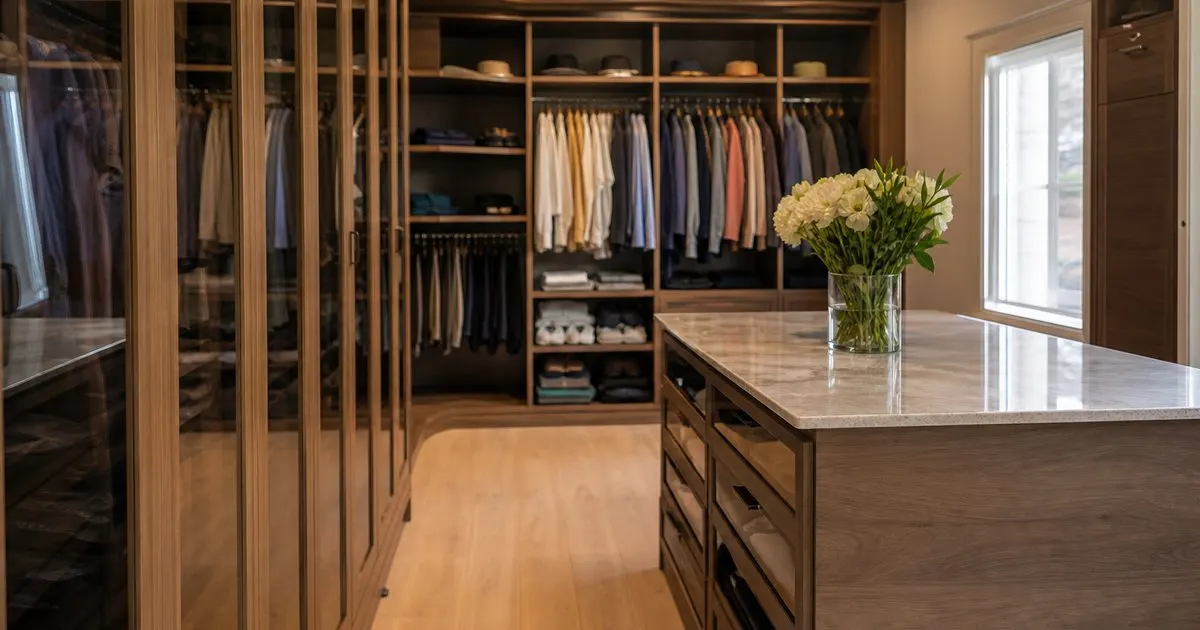
How Much Does A Truly Bespoke Walk In Closet Cost To Build?
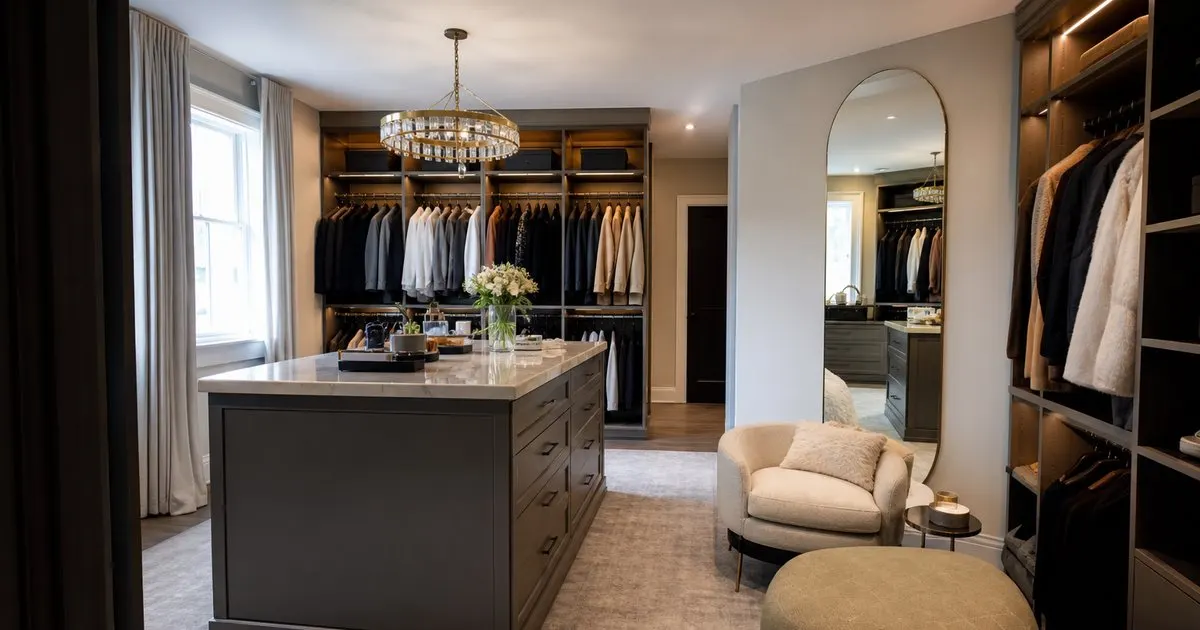
What Distinguishes A Custom Dressing Room From An Ordinary Built In Wardrobe?
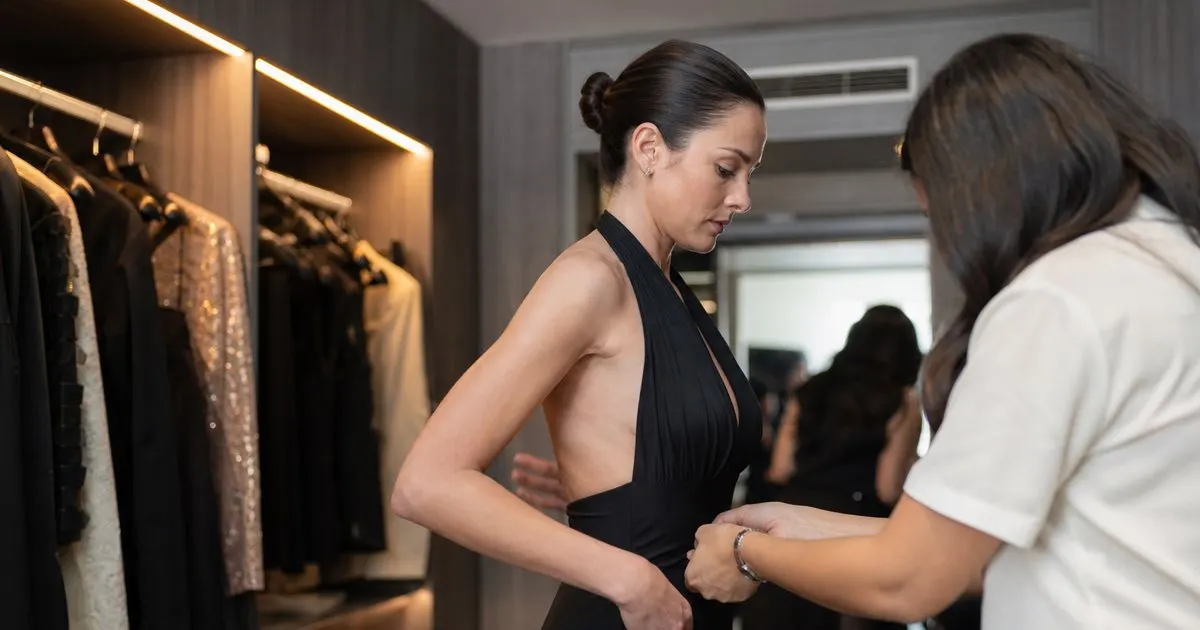
How Do You Plan Lighting And Ventilation For A Luxury Walk In Closet?
Get the complete bespoke walk-in closets and dressing rooms guide
Our full buying guide, the price guide, and new research as we publish it. One email, no spam, unsubscribe any time.